DEFENCE MINISTER URGES SOUTHERN KADUNA TO TURN HISTORICAL GRIEVANCES INTO PEACE, DIALOGUE AND DEVELOPMENT.
KADUNA | August , 21, 2026 | By Matthew Saiza —
The Honourable Minister of Defence, Gen. Christopher Gwabin Musa (Rtd), OFR, represented by the Member Representing Jaba Constituency at the State House of Assembly, Hon. Henry Zachariah Marah, at the public presentation of Southern Kaduna and the El-Rufai Dark Years: The Atyap Perspective, authored by Barr. Francis Kozah.

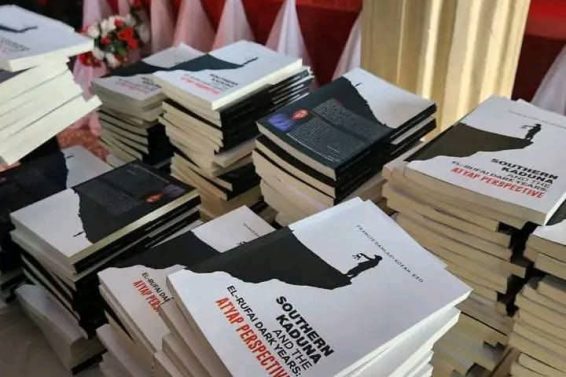 The book held at Access Hotel, Constitution Road, Kaduna, bringing together traditional rulers, political leaders, government officials, members of the academia, religious leaders, security personnel, media practitioners and representatives of the Atyap people.
Delivering the Minister’s address, Marah highlighted the importance of documenting history, saying societies must preserve difficult experiences in order to learn from them and prevent the recurrence of past tragedies.
He congratulated the author for undertaking what he described as a “difficult, sensitive and important intellectual exercise,” noting that books documenting the experiences of communities affected by conflict can help preserve memory, encourage responsible debate and contribute to reconciliation.
According to the Minister, historical documentation should not be used to deepen divisions but should provide an opportunity for society to interrogate the past through evidence, scholarship and responsible dialogue.
He acknowledged that different communities may have different interpretations of historical events, stressing that one community’s experience should not be dismissed simply because another community remembers the same period differently.
He therefore commended Kozah for documenting the experiences of Southern Kaduna and the Atyap people from a particular perspective, while encouraging further research and documentation to create a broader and more balanced historical record.
The Defence Minister described the experience of Southern Kaduna as part of Nigeria’s broader national challenge of managing diversity, identity, land, traditional institutions, religion, politics, security and development.
He acknowledged the contributions of the Atyap and other Southern Kaduna communities to Kaduna State and Nigeria, while noting that insecurity has subjected many communities to fear, displacement, destruction of livelihoods and loss of lives.
He stressed that meaningful development cannot take place without security, while sustainable security cannot be achieved without justice, inclusion and development.
The Minister maintained that Nigeria’s security cannot be achieved by the Armed Forces alone, despite the constitutional responsibility of the military to defend the nation and support civil authorities when required.
He called for stronger collaboration among federal and state governments, traditional rulers, religious leaders, communities, youth organisations, women, civil society, the media and citizens.
He noted that intelligence becomes more effective when communities trust security institutions and are willing to provide credible information, while conflict prevention is more successful when traditional and religious leaders are involved at an early stage.
According to him, Nigeria’s security architecture must increasingly become people-centred, intelligence-driven and community-oriented.
Justice Must Not Become Revenge While acknowledging the importance of accountability, the Minister urged Nigerians to avoid turning historical grievances into a politics of blame or vengeance.
He said where credible evidence establishes wrongdoing, appropriate institutions must act in accordance with the law, but warned that justice must be distinguished from revenge.
He also cautioned against using political disagreements, ethnic identity or historical grievances as justification for violence.
According to Musa, the responsibility is to learn from what happened and build institutions that are stronger than individual personalities and political administrations.
The Minister also addressed young people, particularly youths in Southern Kaduna, urging them to learn from history without inheriting hatred.
He encouraged them to understand the context of historical grievances and resist attempts to weaponise ethnicity, religion or place of origin against fellow Nigerians.
He challenged the younger generation to become “builders of bridges, defenders of truth and champions of peaceful coexistence,” stressing that the future of Atyap land, Southern Kaduna and Nigeria rests significantly on their choices.
From Suspicion to Dialogue Looking ahead, the Minister said the Federal Government, under President Bola Ahmed Tinubu’s Renewed Hope Agenda, remains committed to strengthening national security, rebuilding public confidence and creating an environment conducive to sustainable development.
The Hon. Minister called on security agencies to improve professionalism, intelligence capabilities and operational effectiveness while respecting citizens’ rights.
He equally urged traditional rulers to promote reconciliation, religious leaders to preach peace and responsible citizenship, political leaders to avoid inflammatory rhetoric and community leaders to reject violence.
Citizens, he added, have a responsibility to support security agencies by providing credible information, while young people must reject recruitment into criminal and violent groups.
On the future of the region, the Minister said the region possesses significant human, agricultural and cultural resources capable of contributing to Kaduna State and Nigeria’s economic development. He, however, stressed that the region’s potential can only be fully realised in an atmosphere of peace and security.
He consequently called for a transition from suspicion to dialogue, division to cooperation, fear to confidence, insecurity to development, and identity politics to shared citizenship.
The Minister described the book presentation as more than a literary event, saying it provides an opportunity for Nigerians to remember, reflect, ask difficult questions and learn from history.
Gen Musa encouraged scholars, researchers, policymakers and citizens to engage the book critically and constructively while contributing additional evidence and perspectives to the understanding of Southern Kaduna’s history.
He urged stakeholders to honour those who lost their lives, support displaced persons and affected communities, and ensure that the painful experiences of the past become lessons for building a more peaceful and united Nigeria.
He concluded by congratulating Barrister Francis Kozah for his contribution to historical documentation and public discourse, expressing hope that the book would become “a bridge to understanding” rather than a monument to division.
— END –
